A Claim Is Not the Same as Its Example
Learn to assess a claim beyond its most vivid example, so you can tell what the case establishes and what evidence a wider conclusion still needs.

The most common mistake when assessing a claim is treating its most vivid example as a miniature version of the whole story. A memorable person, scene, or incident can shape what seems typical, even when it tells you little about the broader pattern. The cost is a conclusion that reaches farther than its support.
Claims and examples
A claim is a statement offered for acceptance; an example is a particular case used to make an idea concrete. Their roles differ. “A tenant received an unclear letter” describes one case. “Tenants receive unclear letters” makes a claim about a group.
The difference matters even when the example is accurate. A case can show that an event occurred, or illustrate what a claim would look like in practice. It does not automatically establish how widespread the event is, what caused it, or whether other cases resemble it.
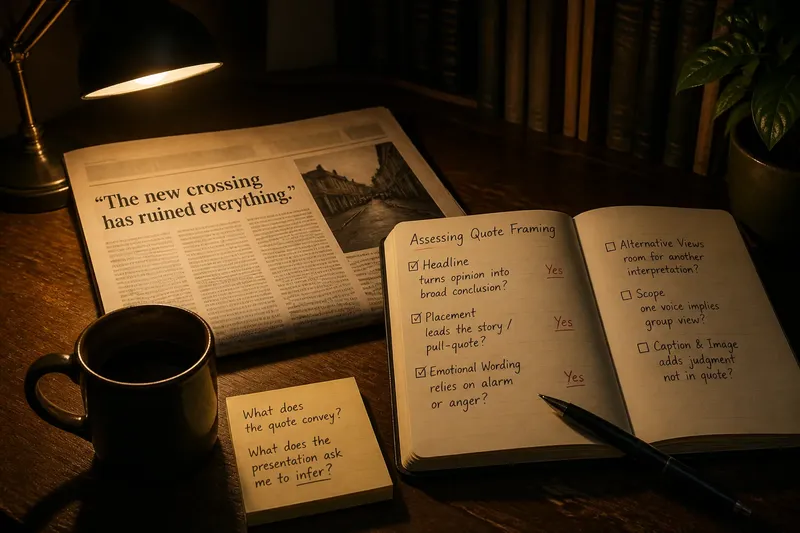
Pay attention to the language that sets a claim’s reach. “This happened” is narrower than “this happens often.” Words such as “most,” “always,” and “everyone” broaden the assertion. A headline or caption can broaden it too, even if the account beneath it describes only one person.
Evidence for each claim
Different claims call for different support. An account may be relevant to whether a particular incident occurred. A claim about a recurring pattern calls for material that addresses recurrence; a causal claim calls for a reason to connect the proposed cause with the outcome.
For instance, an account of a confusing application form may help readers understand the difficulty one applicant faced. If the claim is that applicants generally struggle with the form, readers need information that speaks to applicants beyond that single account. The right evidence depends on the claim’s subject, place, time, and scope.
This does not make personal accounts disposable. They can reveal a consequence, put an abstract issue into human terms, or point to a question that deserves attention. Their value is not the same as their reach: a detailed case can be meaningful without representing a whole group.
Read the case closely
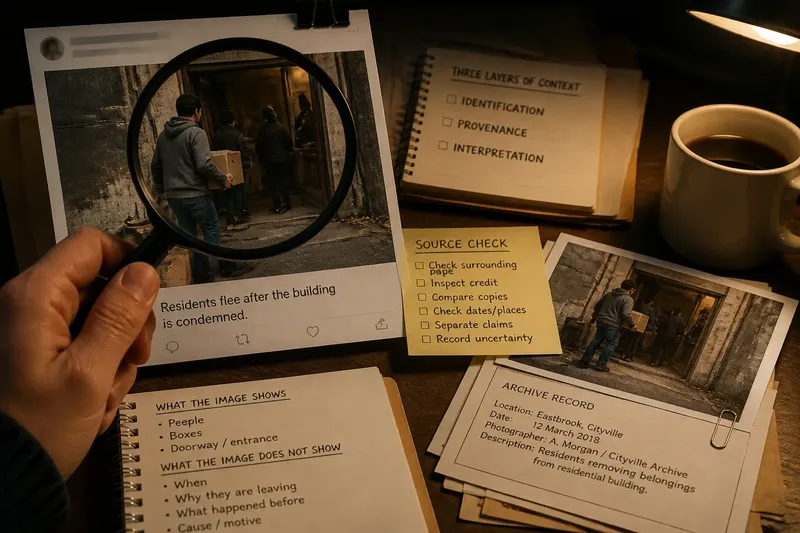
Before drawing a broader conclusion, distinguish what the account directly describes from what a reader might infer. A report that a delivery arrived late describes an outcome. By itself, it may not identify the reason or show how deliveries usually go.
- Event: If the account clearly describes a particular incident, treat it as evidence about that incident; if the event is only suggested, look for a clearer account before accepting it as established.
- Pattern: If the claim concerns repeated cases but the material offers only one, keep the conclusion limited to that case; if it connects multiple relevant cases, consider the pattern while checking how they were selected.
- Cause: If the account describes an outcome without linking it to a cause, do not treat the cause as settled; if it provides a credible connection, assess that connection alongside other plausible explanations.
- Scope: If the evidence concerns different people, places, or periods from the claim, narrow the conclusion or seek closer-matching material; if they align, the evidence is more relevant to the stated scope.
- Comparison: If there is no useful baseline, avoid calling the case typical or unusual; if a relevant comparison is available, use it to judge what the case can show.
- Selection: If the account gives no reason these cases were chosen, treat representativeness as unresolved; if the selection method is explained, judge whether it fits the claim.
These checks are not a demand that every story provide every kind of evidence. They help identify the point where a narrow observation becomes a wider inference.
Spot changes in scope
A scope shift occurs when an argument starts with a narrow observation and ends with a broader conclusion. “One shop turned away a customer, so local shops discriminate” makes that shift plainly. Elsewhere, a sweeping headline above one account can make it less obvious.
Track the subject as you read. If a passage moves from “one employee” to “the company,” or from “this school” to “schools,” ask what supports the wider wording. Also notice when a report moves from a bad outcome to a claim that a policy caused it. The outcome may deserve attention, while the causal link remains unestablished.
Work through a claim
Imagine a neighborhood newsletter says a new bus route leaves riders stranded and describes one rider who missed a connection after a late bus. Start with the account’s direct observation: one rider missed one connection after that bus was late. Next, separate the claim from the account: “the route leaves riders stranded” suggests a recurring problem, while the case describes one incident.
Now check what information would address the gap. Route schedules and service notices could clarify the timing of that connection; additional accounts might indicate whether others faced similar problems; information about the route and period in question could help establish the relevant scope. If those materials remain unavailable, the careful conclusion is that the account describes one missed connection, while the broader pattern is unresolved. The specific tradeoff is clear: the case makes the concern concrete, but it cannot settle how often it happens.
There is no need to demand broad evidence for a modest statement about one person’s reported experience. The more a claim covers people, places, or causes, the more closely its support should match those terms.
When does an example support a broader claim?
Can one example establish a claim?
It can support a narrow claim about a particular event when the account is relevant and reliable. On its own, it generally cannot establish frequency, typical experience, or cause.
What does an anecdote show?
An anecdote is a brief account of a particular experience or event. It can make a consequence clear or suggest a question, but it does not automatically represent a larger group.
Does a vivid story count as evidence?
It can count as evidence for some claims, such as what one person experienced or what event an account describes. Its vividness does not answer separate questions about how common the experience is or what caused it.
What should I check after reading one?
Compare the claim with the case: do they concern the same people, place, period, and kind of outcome? If the claim reaches beyond the account, look for support that addresses the missing ground or keep your conclusion narrower.
Keep conclusions proportionate
A useful habit is to state the conclusion at the narrowest level the available material supports. “This account describes one rider’s missed connection” is more precise than “the route leaves riders stranded.” The narrower statement does not prove the broader claim false; it makes clear what remains unknown.
It is not worth the effort to argue over whether every personal account counts as “real evidence.” That label hides the more useful question: evidence for what? Ask what the case establishes, then match any wider conclusion to support that reaches the same claim.
When a memorable case comes to mind, keep its details in view and name its limits at the same time. That distinction makes it easier to take an individual experience seriously without letting the example stand in for a pattern it has not established.