Named Expert or Firsthand Witness?
Named expert or firsthand witness? Learn how to judge what each source can establish, what remains uncertain, and when another source is needed.
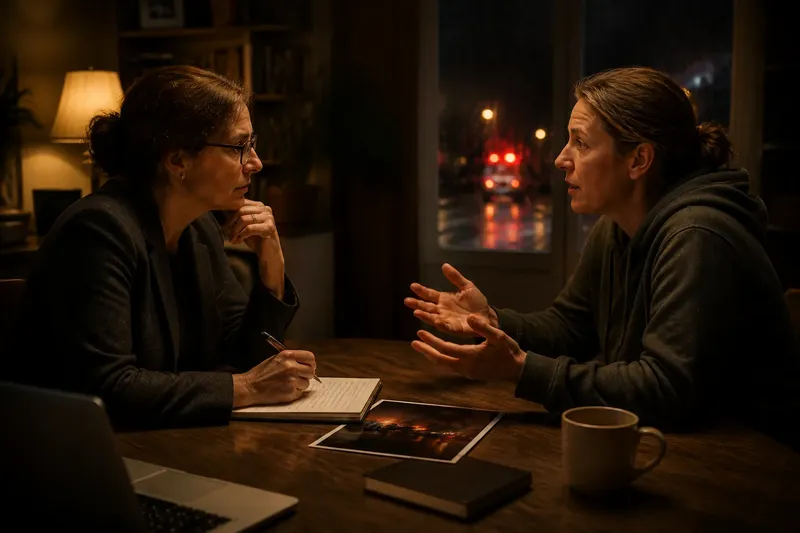
The common mistake in judging a named expert or firsthand witness is treating confidence as proof. That can leave a reader with a claim that outruns what the speaker actually knows: a credential does not establish every detail of an event, and being present does not reveal everything that happened.
A better question is what kind of knowledge the account offers. Expertise helps explain a subject through relevant training or work; firsthand testimony records what a person directly experienced. Neither role settles every dispute, and neither should be dismissed simply because another kind of source exists.
Different kinds of knowledge
Expertise is knowledge built through relevant study or practice. A witness’s knowledge comes from direct perception or participation. These are distinct routes to information, though one person can have both.
The distinction matters because readers often encounter a source in a story that asks more than one question. A report about a fire, for example, may ask what a resident saw, how a fire develops, and what caused this particular fire. Those are separate questions, and a single speaker may not be positioned to answer all of them.
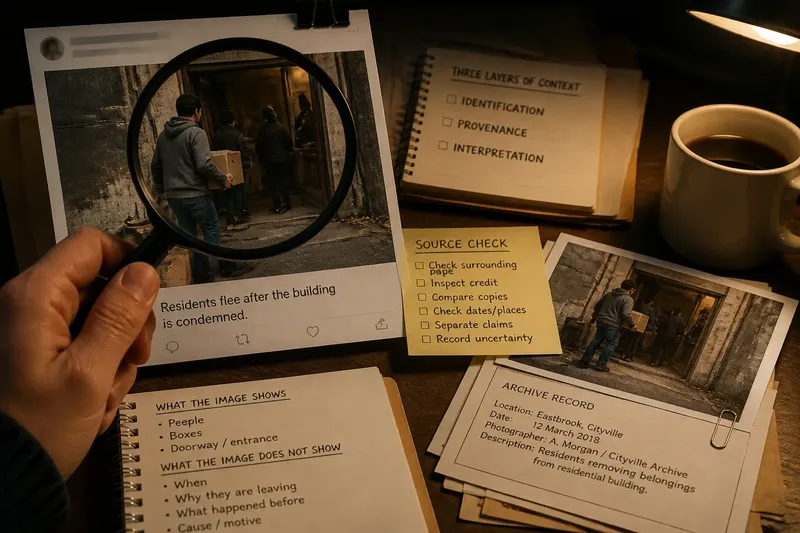
For an expert, check whether the specialty matches the subject under discussion. A structural engineer may explain how a building material behaves, but that expertise alone does not establish when a particular wall was damaged. For a witness, ask what the person could perceive from their location and whether they are describing direct observation or later interpretation.
Credentials and access
A title can help readers identify relevant experience, but it is not a complete account of how a person reached a conclusion. A clear expert explanation indicates the relevant background, the information considered and any uncertainty that affects the judgment. If those details are missing, treat the conclusion as less transparent rather than filling in the gaps yourself.
Access matters in a different way for witnesses. A person may be well placed to describe a conversation they attended but unable to know what others discussed elsewhere. Someone who heard a crash can reliably report hearing it without being able to identify what caused it.
Pay attention to the wording a source uses. “I saw smoke near the loading dock” reports a perception. “A faulty machine started the fire” assigns a cause. The latter may be true, but it needs a basis beyond the observation itself.
Reading accounts in context
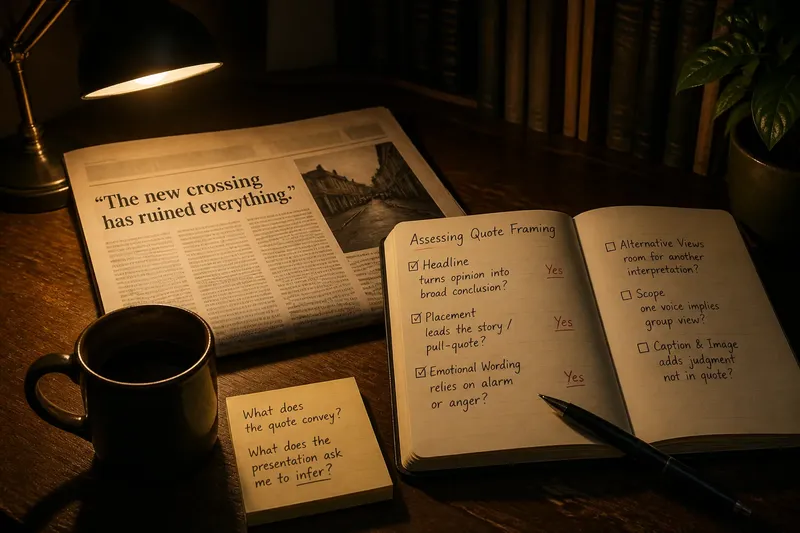
Accounts also arrive through an editor’s choices: which speaker appears, which detail leads, and which uncertainty is left in the background. A witness quoted at the start of a story may feel central even if the story later relies on records or specialist analysis. Notice whether the framing distinguishes a person’s experience from the article’s broader claim.
Compare the account with the question it is being used to answer. If a story presents an expert’s general explanation beside a witness’s vivid recollection, those contributions are not necessarily competing. One may describe how a process usually works; the other may describe what a particular person noticed.
When two accounts seem inconsistent, look for differences in vantage point, timing and wording before deciding that one must be false. One person may describe what happened in a hallway while another describes what was visible from outside. Their accounts can differ without addressing the same slice of an event.
A source-fit checklist
Use these checks to decide how much weight a source can carry. Each result points to a practical next move rather than a verdict about the speaker’s character.
- Role: Observe whether the person speaks as a specialist, a witness, or both. If the role is clear, connect the claim to that kind of knowledge; if it is unclear, seek a description of the person’s basis before relying on the claim.
- Subject fit: Check whether the expert’s stated specialty matches the precise topic. If it does, consider the explanation within that field; if it does not, narrow the claim or look for a more relevant specialist.
- Direct access: Check what the witness could see, hear or participate in. If the claim stays within that access, treat it as an account of direct experience; if it reaches beyond it, look for another basis.
- Observation or inference: Mark which words describe what the person perceived and which explain what it means. If the account separates them, preserve that distinction; if not, describe the observation cautiously and seek support for the interpretation.
- Time and place: Check when and where the person encountered the event or information. If those details fit the claim, retain the account’s stated scope; if they leave gaps, avoid extending it to other moments or locations.
- Wider reach: Check whether a source moves from one person or event to a claim about a larger pattern. If it stays specific, keep the conclusion specific; if it generalizes, look for evidence suited to the broader claim.
- Independent support: Check whether relevant records, additional informed accounts or specialist analysis are available. If they are, compare what each contributes; if they are not, say that the claim rests on one account and leave unresolved what it cannot establish.
Not every brief personal account needs a long investigation. It may be enough to understand what someone says they experienced. The extra effort is not worth it when it only produces a more elaborate judgment about a speaker’s personality; focus instead on access, relevant knowledge and the claim being made.
How should source roles be judged?
Is a named expert more reliable than a firsthand witness?
Neither role is automatically more reliable because each bears on different questions. An expert may explain a technical subject, while a witness may describe a direct experience; judge the fit between the role and the specific claim.
Can one person speak as both expert and witness?
Yes. A specialist who observed an event can describe personal perceptions and offer professional interpretation. Keep those contributions separate so the credentials do not make an observation more precise than it was.
What can a single witness account establish?
It can establish what that person says they perceived or experienced, subject to the limits of memory and vantage point. It does not by itself settle details outside the person’s access or show that the event was typical.
When should a reader seek another source?
Look for additional material when a claim assigns a cause, extends beyond one person’s view or describes a broader pattern. Records, other informed accounts or relevant specialist analysis may address those different questions.
A worked reading
Say a local news report describes a chemical odor in an apartment building. Imagine, hypothetically, that a resident says the odor was strongest near a basement door on a particular evening, while a qualified environmental professional explains that several kinds of sources can produce similar odors. The resident’s statement supports what that person noticed and where; the professional’s explanation identifies possibilities, not the source in this building.
Next, separate what is known from what is open. The report has one account of the odor’s location and a general explanation of possible causes, but neither identifies the source. If a building maintenance record or an appropriate assessment later addresses the basement, that material could help answer the cause question; without it, the careful reading is that the odor was reported and its origin remains undetermined.
Keep the claim precise
When describing a source to someone else, state what the person contributed: an expert explained a process, or a witness recounted a particular experience. That wording lets readers assess the account without mistaking professional authority for direct observation or direct observation for a complete explanation.
For a named expert or firsthand witness, ask what the person had grounds to know, what the account leaves open, and whether its framing invites a broader conclusion. Those questions help preserve the value of a source while keeping its claims in bounds.